French Press Round Up
Four presses, one method. The differences come down to material: glass, stainless, stoneware, and insulated steel each brew the same and live very differently.
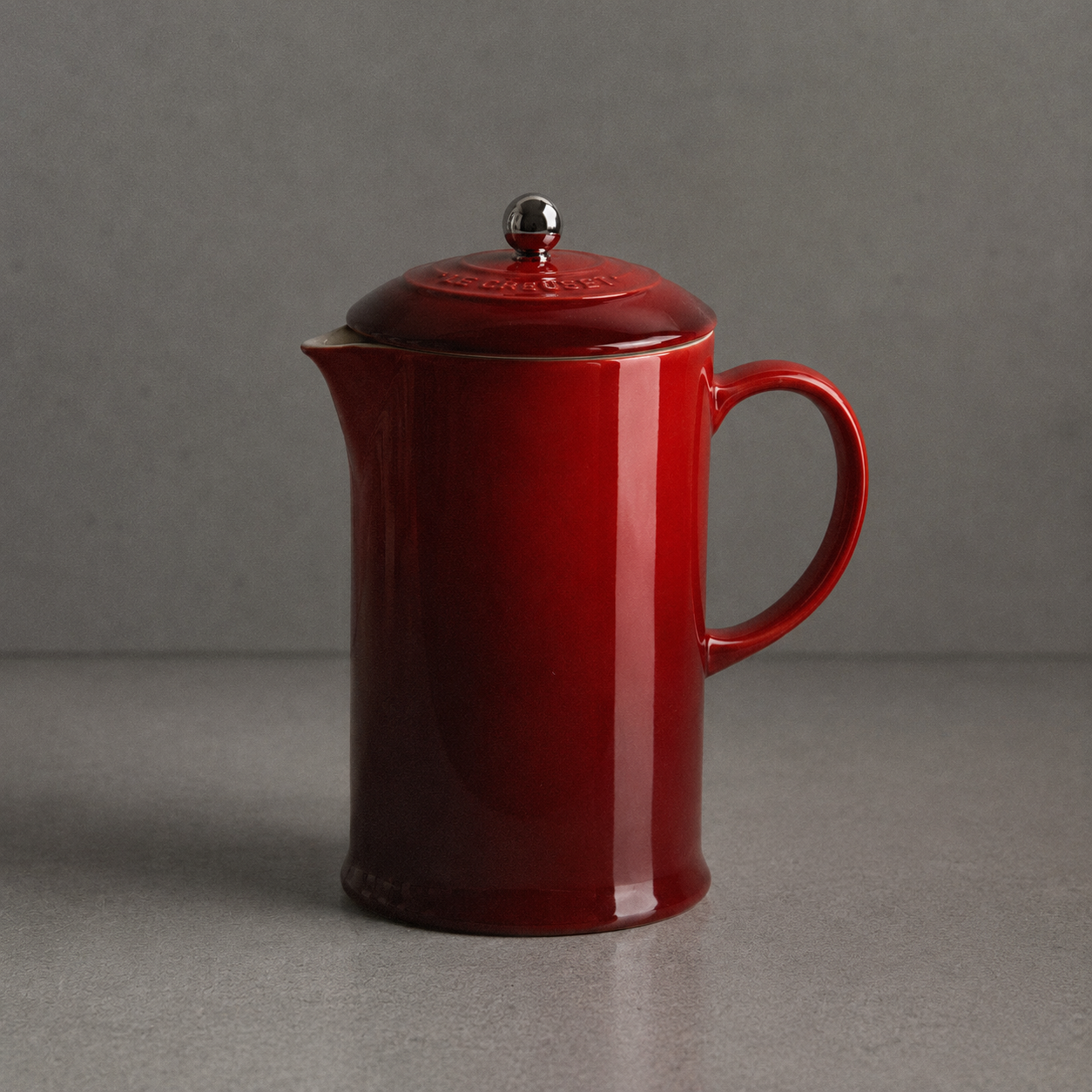
The French press hasn't been redesigned in a century because it doesn't need to be. What has changed is the vessel. Glass is the original and the most fragile. Stainless holds heat and survives everything. Stoneware is heavier, warmer, and more expensive. Here's where each of the four lands.
Bodum Chambord
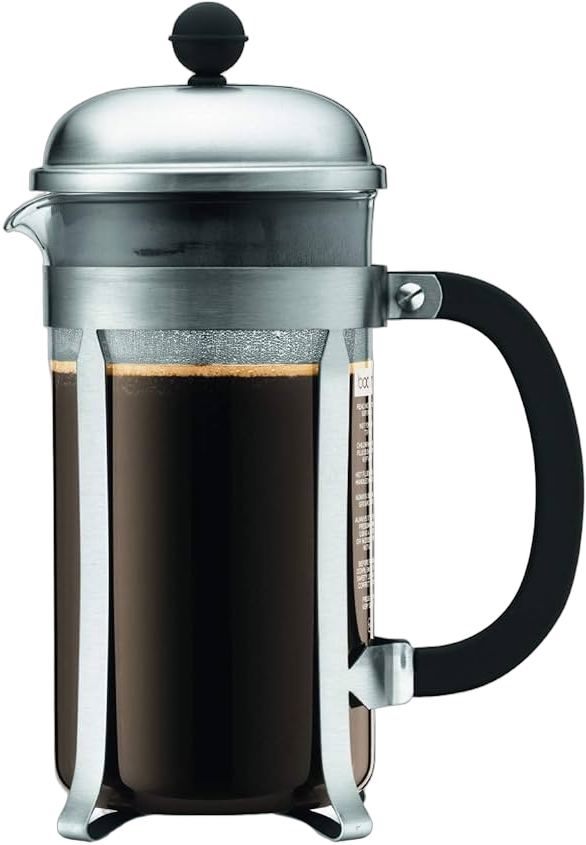
The archetype. Borosilicate glass, stainless frame, clean plunge. It loses heat faster than the others and glass carafes eventually break — but at this price, you replace it and move on. If you drink the pot quickly, there's no reason to spend more.
Frieling Stainless Steel
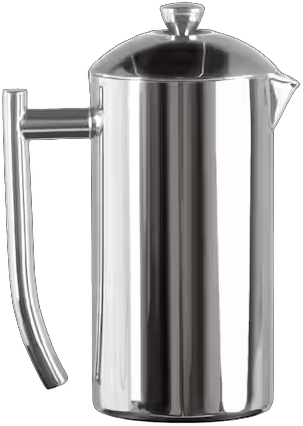
Double-wall stainless with a dual-screen filter that produces a cleaner cup than any single screen. It keeps coffee hot through a second pour and cannot be broken by normal life. The choice if you've already replaced a glass carafe twice.
Le Creuset Stoneware
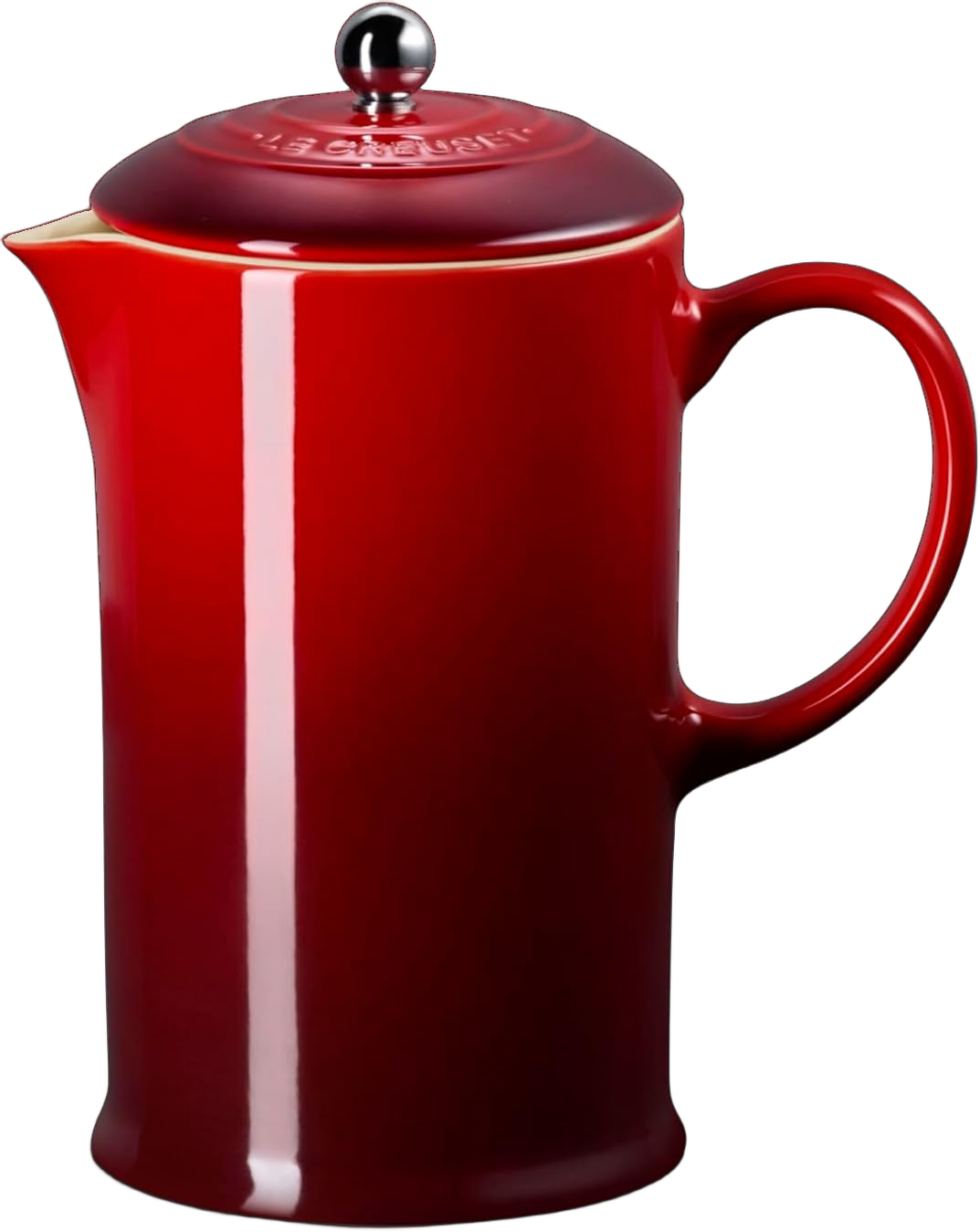
Stoneware retains heat well and the colorways are Le Creuset's. It's the heaviest and the most expensive, built on the same logic as their cookware: decades of use, visible on the counter. Whether that logic applies to a coffee press depends on your kitchen.
Aarke Double-Wall
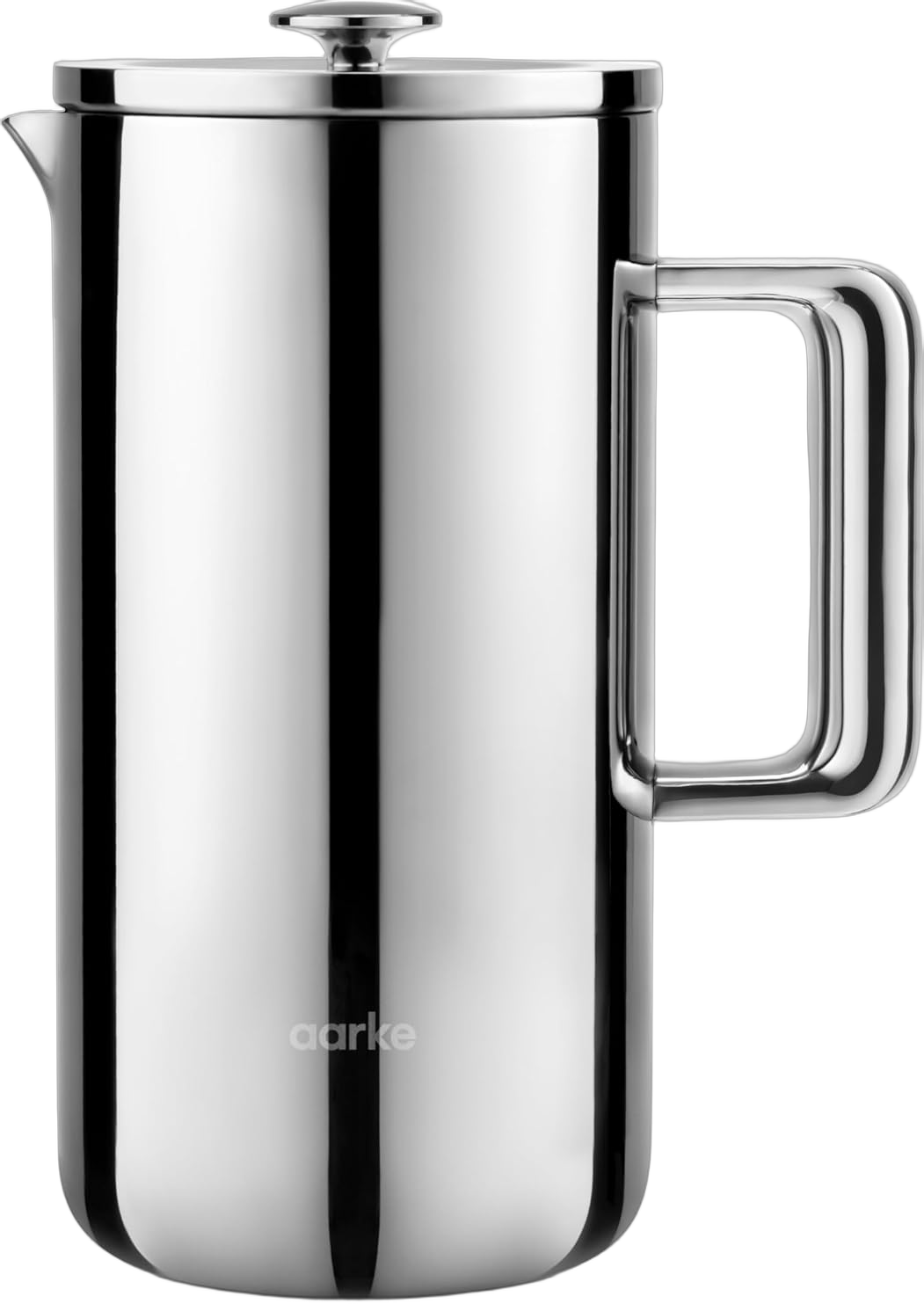
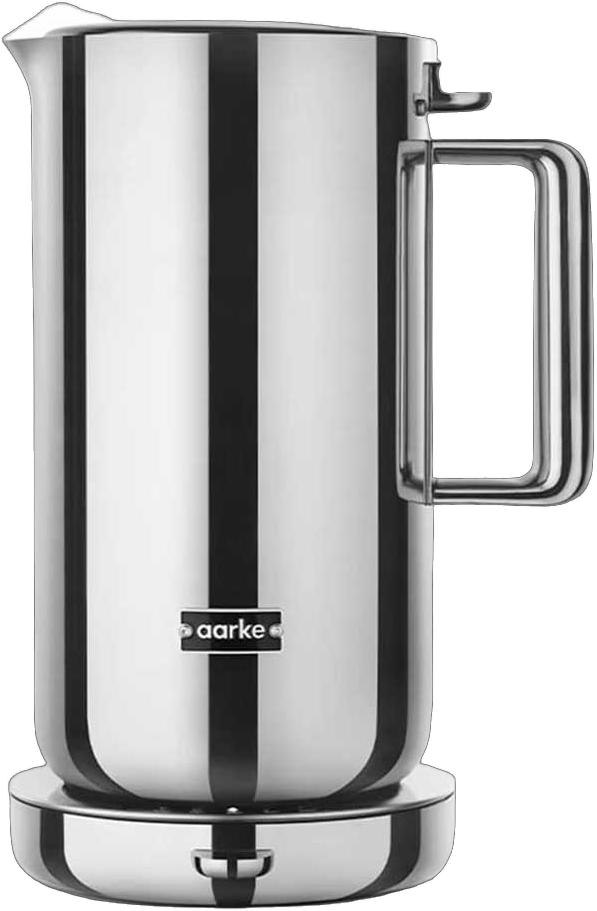
Functionally the Frieling's equal — insulated stainless, precise plunge, easy cleanup. The premium buys the design: a slimmer profile and the restraint Aarke applies to everything. The best-looking version of the stainless answer.
The Verdict
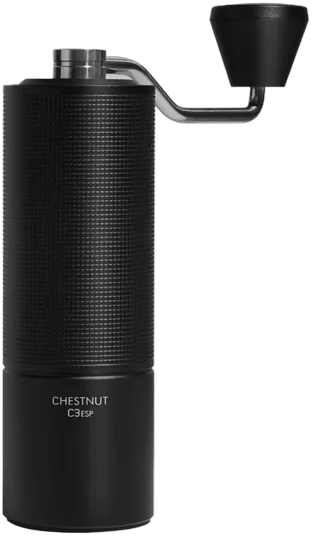
Chambord for the classic at the lowest price. Frieling for heat and durability. Le Creuset if your kitchen already runs on it. Aarke for the same performance with better lines. A burr grinder will do more for the cup than any of the four.
If You'd Rather Buy on Looks
The four above win on function. These win on the shelf — pattern, sculpture, and material where the mainline picks play it safe.
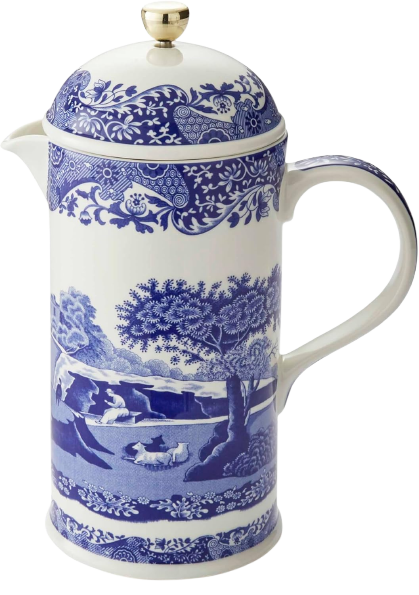
Spode's Blue Italian pattern, printed since 1816, on a porcelain cafetière. The press for a table that's already set.
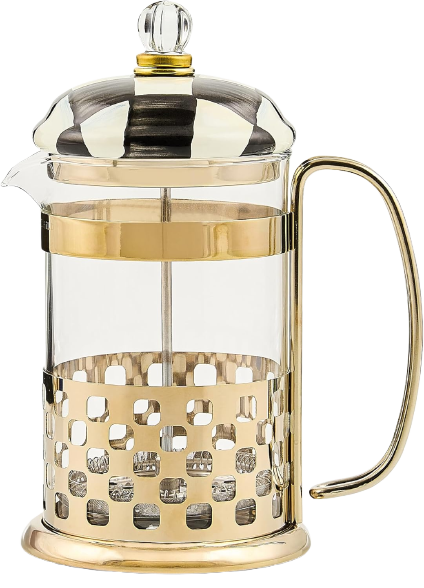
Hand-painted Courtly Check around a 32-ounce glass press. Nobody buys MacKenzie-Childs quietly, and that's the point.
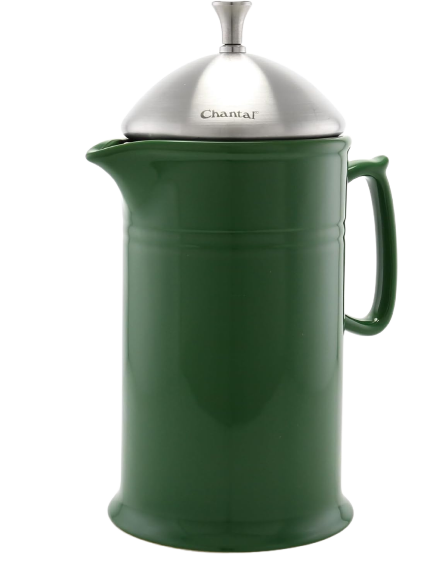
Stoneware instead of glass — holds heat longer than a Bodum and survives the counter knock that a carafe wouldn't.